




FIRST RUBBER
The Benefits and Applications of Teflon Coated Rubber Stoppers in Pharmaceutical Packaging
Published:
Aug 14,2024
Classification:
This article explores the significance of Teflon coated rubber stoppers in the pharmaceutical packaging industry, highlighting their unique properties, applications, and advantages over traditional ma
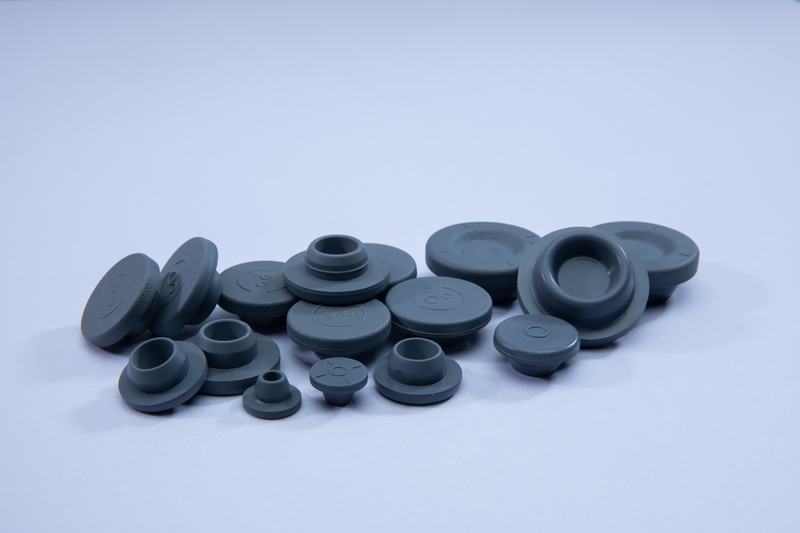
Teflon coated rubber stoppers are rapidly gaining recognition in the pharmaceutical packaging sector due to their unique blend of properties that enhance safety, reliability, and efficiency in medical applications. These stoppers are primarily used to seal vials and other containers, ensuring that the contents remain uncontaminated and stable throughout their shelf life.
One of the standout features of Teflon coated rubber stoppers is their exceptional chemical resistance. Teflon, or polytetrafluoroethylene (PTFE), is known for its inertness, meaning it does not react with most chemicals, making it an ideal choice for pharmaceutical applications. This characteristic is particularly crucial in maintaining the integrity of sensitive medications, vaccines, and biological samples that require stringent environmental conditions.
Moreover, Teflon's low friction properties greatly reduce the risk of cross-contamination when the stopper is penetrated by a needle. This is a significant concern in medical environments where sterility is paramount. The Teflon coating provides an additional layer that minimizes the likelihood of particles adhering to the stopper, thereby ensuring a cleaner and safer process for healthcare professionals.
In terms of performance, Teflon coated rubber stoppers exhibit excellent sealing capabilities. This feature is essential for preserving the efficacy of pharmaceutical products by preventing leakage and contamination. The combination of rubber's elasticity and Teflon's durability allows these stoppers to provide a tight seal, even under varying temperatures and pressures. This is especially important in situations where medications are stored in refrigeration or subjected to temperature fluctuations.
Another notable advantage of Teflon coated rubber stoppers is their ability to withstand sterilization processes. Many medical and pharmaceutical products require sterilization to eliminate harmful microorganisms. The Teflon coating can endure various sterilization methods—such as autoclaving—without degrading, ensuring that the stoppers maintain their properties and performance over time.
Furthermore, the use of Teflon coated rubber stoppers aligns with industry trends towards more sustainable packaging solutions. As the pharmaceutical sector increasingly focuses on minimizing environmental impact, these stoppers are a viable choice due to their longevity and recyclability, thus contributing to a more eco-friendly approach to pharmaceutical packaging.
In conclusion, Teflon coated rubber stoppers offer significant advantages in the pharmaceutical packaging industry, from their chemical resistance and low friction properties to their excellent sealing capabilities and sterilization endurance. These features make them a vital component in ensuring the safety and efficacy of pharmaceutical products, positioning them as a preferred choice in modern medicine and healthcare settings.
One of the standout features of Teflon coated rubber stoppers is their exceptional chemical resistance. Teflon, or polytetrafluoroethylene (PTFE), is known for its inertness, meaning it does not react with most chemicals, making it an ideal choice for pharmaceutical applications. This characteristic is particularly crucial in maintaining the integrity of sensitive medications, vaccines, and biological samples that require stringent environmental conditions.
Moreover, Teflon's low friction properties greatly reduce the risk of cross-contamination when the stopper is penetrated by a needle. This is a significant concern in medical environments where sterility is paramount. The Teflon coating provides an additional layer that minimizes the likelihood of particles adhering to the stopper, thereby ensuring a cleaner and safer process for healthcare professionals.
In terms of performance, Teflon coated rubber stoppers exhibit excellent sealing capabilities. This feature is essential for preserving the efficacy of pharmaceutical products by preventing leakage and contamination. The combination of rubber's elasticity and Teflon's durability allows these stoppers to provide a tight seal, even under varying temperatures and pressures. This is especially important in situations where medications are stored in refrigeration or subjected to temperature fluctuations.
Another notable advantage of Teflon coated rubber stoppers is their ability to withstand sterilization processes. Many medical and pharmaceutical products require sterilization to eliminate harmful microorganisms. The Teflon coating can endure various sterilization methods—such as autoclaving—without degrading, ensuring that the stoppers maintain their properties and performance over time.
Furthermore, the use of Teflon coated rubber stoppers aligns with industry trends towards more sustainable packaging solutions. As the pharmaceutical sector increasingly focuses on minimizing environmental impact, these stoppers are a viable choice due to their longevity and recyclability, thus contributing to a more eco-friendly approach to pharmaceutical packaging.
In conclusion, Teflon coated rubber stoppers offer significant advantages in the pharmaceutical packaging industry, from their chemical resistance and low friction properties to their excellent sealing capabilities and sterilization endurance. These features make them a vital component in ensuring the safety and efficacy of pharmaceutical products, positioning them as a preferred choice in modern medicine and healthcare settings.

Tel: +86-0311-89197800
Hotline: +86 151 2277 7167
E-mail: inquiry1@desheng.net
Add:No. 518, Zhengding Technology Industrial Park, Shijiazhuang City, Hebei Province, China